
Award-winning and trusted since 1976, Litco Law has helped thousands of Albertans navigate some of life’s toughest moments. With 1,000+ 5-star Google reviews, our team is known for delivering exceptional results and caring support when it matters most.
If you’ve been injured in an accident in Alberta, you may suddenly find yourself hearing legal terms that feel unfamiliar, and sometimes confusing. The last thing you need is a wall of legal jargon that makes an already difficult situation feel even more complicated.
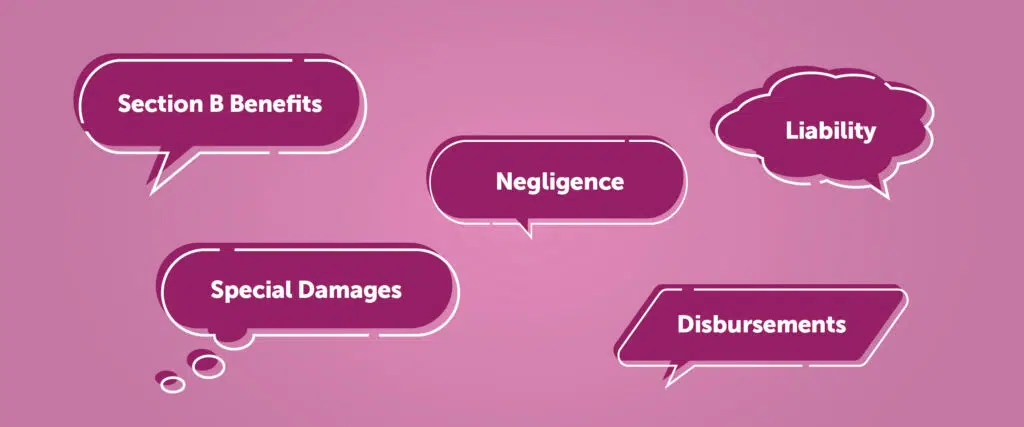
Negligence. Liability. Section B Benefits. Contingency fees…
These words get used often in personal injury claims, but they’re not always explained in a way that feels clear or practical. Understanding what they actually mean can make the claims process feel far more manageable. Whether you’re actively pursuing a claim or simply researching your options, this guide breaks down the key terms you’re likely to hear, and why they matter.
Quick Links to Key Legal Terms
Negligence
Negligence is the legal foundation of most personal injury claims in Alberta. In simple terms, negligence means someone failed to take reasonable care, and that failure caused an injury.
For example:
- A driver runs a red light.
- A property owner ignores an icy walkway.
- A professional makes a preventable mistake.
To prove negligence, a personal injury lawyer in Alberta generally needs to show:
- The person owed you a duty of care (for example, drivers must operate their vehicles safely and property owners must maintain safe premises).
- They failed in or breached that duty by acting in a way a reasonable person would not have.
- That breach directly caused your injury.
In other words, it’s not enough that someone made a mistake, the mistake must have led to harm. In Alberta, more than one person can share responsibility for an accident. Negligence is about legal accountability and determining whether someone’s lack of reasonable care caused harm and whether compensation (money) is owed as a result.
Liability
Liability refers to legal responsibility. If someone is “liable,” it means they are legally responsible for the accident and the harm caused. In some motor vehicle accident claims, liability is clear early on. In other cases, it may be disputed and require investigation and evidence gathering to resolve. This can include reviewing police reports, witness statements, medical records, photographs, and expert opinions.
In Alberta, liability can also be shared between parties, depending on how the accident occurred. Determining liability is a critical part of any personal injury claim because it directly affects the compensation (money) you may be entitled to receive. Before you can receive compensation, it must be clear who is legally responsible, and to what extent.
Contributory Negligence
Contributory negligence means that more than one person shares responsibility for an accident.
For example:
- One driver was speeding
- The other failed to signal
In situations like this, fault can be divided between the parties. If you are found partially at fault, your compensation may be reduced by your percentage of responsibility. However, this does not automatically prevent you from making a claim.
“In Alberta, it’s common for fault to be shared. You can still pursue, and receive, compensation even if you were partly responsible for what happened. Many people are surprised to learn this. Being partially at fault does not mean you have no case, it simply affects how compensation is calculated.”
For example:
If you were found 20% at fault for an accident, your compensation would typically be reduced by 20%. That still means you may be entitled to recover the remaining 80% of your damages, which can amount to thousands or more, depending on the severity of your injuries and financial losses (i.e. missed time off work, medical bills, and out-of-pocket expenses).
Damages (General vs. Specific)
In personal injury law, damages refer to the financial compensation you may receive for your injuries.
There are two primary categories:
General Damages
These compensate you for non-financial losses such as:
- Pain and suffering
- Loss of enjoyment of life
- Emotional impact
They are not tied to a specific bill invoice but reflect how your injuries have affected your life overall.
Special Damages
These are financial losses that can be calculated and supported by documentation, such as:
- Medical expenses
- Future care costs
- Out-of-pocket expenses
Both types of damages are essential when assessing the full value of a personal injury claim.
Section B Benefits
In Alberta, Section B benefits are automatically available through your own auto insurance policy after a motor vehicle accident.
These benefits may help cover a portion of:
- Medical and rehabilitation expenses
- Certain disability benefits
- Funeral expenses (in fatal cases)
You can access Section B benefits regardless of who caused the accident. They are separate from a personal injury claim against the at-fault party and can provide early financial support.
It’s important to know that Section B benefits are subject to specific coverage limits and timelines. Treatment plans often need to be submitted within certain timeframes, and there are limits to the compensation you can receive.
Disbursements
Disbursements are costs of gathering the evidence needed to prove your claim. They are separate from legal fees.
Examples include:
- Medical report fees
- Court filing fees
- Expert opinions
- Record requests
These costs can range from a few hundred to several thousand dollars, depending on the complexity of the claim.
At Litco Law, we cover disbursements while your claim is ongoing, so you don’t have to worry about paying these expenses upfront. If your claim is successful, disbursements are typically reimbursed from the settlement at the end of the case.
Not all law firms in Alberta may cover these costs during a claim, so if you’re meeting with different lawyers, it’s a smart question to ask during your consultation.
Contingency Fees
If you’ve been injured because of someone else’s negligence, the last thing you should be worrying about is how you’ll afford a lawyer. In Alberta, most personal injury claims are handled on a contingency fee basis. That means you don’t pay legal fees while your claim is ongoing. Instead, your lawyer is paid a percentage of the settlement only if your claim is successful.
At Litco Law, we clearly explain and agree on that percentage before you ever hire us. We believe in full transparency, with no surprises. And if your claim isn’t successful, you don’t owe us anything.
Maximum Medical Improvement (MMI)
Maximum Medical Improvement (MMI) is the point at which your injuries have stabilized and are not expected to significantly improve with further treatment. This does not necessarily mean you are fully healed. It simply means your recovery has reached a plateau. MMI is typically determined by your treating physician or medical specialists based on your progress over time.
This is an important milestone in many personal injury claims. Until you reach this stage, it can be difficult to fully understand the long-term impact of your injuries, including future care needs, ongoing symptoms, or permanent limitations.
Settling too early may mean those long-term impacts are not properly accounted for. Reaching MMI helps ensure your compensation reflects both your current condition and your future needs.
Litigation
Litigation is the formal legal process of filing a lawsuit and moving a claim through the court system.
Sometimes litigation is necessary to protect your rights, preserve important legal deadlines, or encourage meaningful settlement discussions. Filing a lawsuit does not mean your case has become hostile or that you are headed straight to trial, and it is often simply a procedural step in the claims process. In fact, most personal injury claims in Alberta resolve through negotiated settlement before or during the litigation process.
Litigation does not automatically mean your case will go to trial. Trials are relatively rare. If a trial were ever required, our personal injury lawyers would ensure you are fully prepared and understand each step of the process.
Settlement
A settlement is an agreement between the parties to resolve a claim without going to trial.
It typically involves:
- A negotiated financial payment
- A signed release
- Closure of the claim
Most personal injury claims in Alberta resolve through settlement, often through negotiation during the litigation process.
Once a settlement is finalized and a release is signed, the claim is typically closed permanently. This means you cannot return later to ask for additional compensation, even if new symptoms arise. For that reason, it’s important to ensure the timing and amount of a settlement are carefully considered.
The goal is to ensure the settlement amount fairly reflects the full impact of your injuries, both now and in the future, including pain and suffering, lost income, and ongoing care needs.
Why Understanding These Legal Terms Matters
When you understand the language of your personal injury claim, you’re in a stronger position to ask questions, make informed decisions, and feel confident about the process. At Litco Law, we believe legal guidance should feel clear, not overwhelming.
If you have questions about negligence, liability, damages, or any part of an injury claim in Alberta, we’re here to help you understand your options. Consultations are always free. We never bill by the hour, and you are under no obligation to hire us.
Contact us to speak with a member of our legal team today.
We’ve explained these legal terms in clear, plain language that’s easy to understand. Every situation is different, and how these concepts apply can vary depending on the details of the individual case. If you have questions about your specific situation, please feel free to reach out to our team. This information is provided for general knowledge only and should not be taken as legal advice.