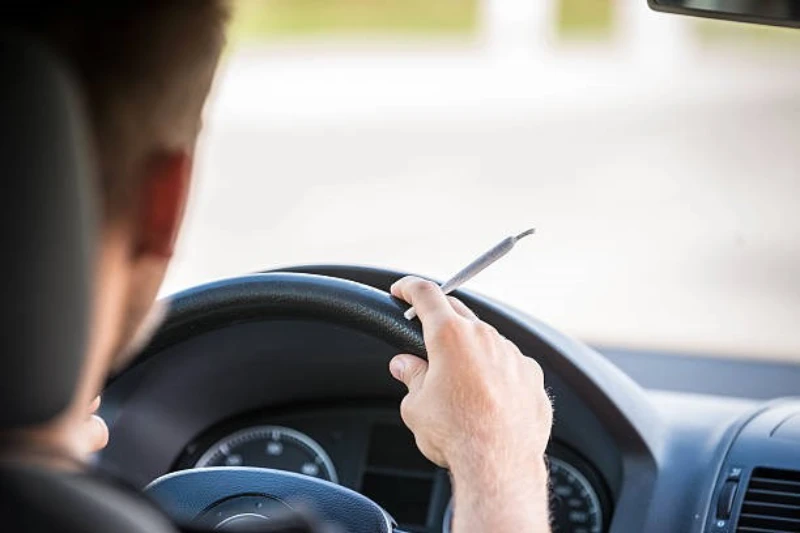
On October 17, 2018, Canada made history by becoming one of the first countries to fully legalize cannabis for medical and recreational use. Since then, our Edmonton personal injury lawyers have been asked about its potential impact on road safety.
Regardless of your stance on the matter, one thing is for sure: in our post-legalization landscape, there’s never been a more relevant time to talk about safety on Alberta’s roads.
While there are laws in place to deter motorists from indulging before they drive, the unfortunate truth is that you may find yourself sharing the streets with cannabis-impaired drivers.
It’s important, therefore, to know what to do in the event of a collision with a high driver. That’s why we’ve put together this quick guide on cannabis and road safety. In it, we clear up some of the confusion around driving while high and offer tips for dealing with a cannabis-related accident—including words from our very own Litco Law CEO, Todd Litwiniuk. Read on and be prepared!
Impairment by Any Other Name
Although cannabis and alcohol have decidedly different effects on the human body, they also have at least one thing in common—when you’re under the influence of either, you’re impaired. In an interview with Canadian Lawyer Magazine, Todd Litwiniuk states, “The key thing to remember is that under Canadian law, impaired driving is a criminal offence, regardless of the substance that causes impairment, or whether that substance is legal.”
It isn’t hard to see why driving under the influence of cannabis is treated as seriously as alcohol intoxication. THC (the psychoactive component of cannabis) has been proven to hinder a person’s ability to react, concentrate, track obstacles, and regulate speed—and while these effects aren’t a big deal when you’re just lounging around, they can become dangerous behind the wheel.
In fact, a recent CAA study found that in 18- to 24-year-olds, cannabis significantly impacted technical driving skills like merging, turning, dealing with roadside distractions, and being conscious of pedestrians. This data paints a pretty clear picture about the true effects of driving while high, and the negative effects of indulging irresponsibly.
Legal Recourse
The big question mark about suing for cannabis-related accidents is how these types of cases will be handled in court going forward. The legal liabilities of a cannabis-impaired driver are the same as those of any other impaired driver—but there are some potential challenges. Science is still catching up with cannabis on our roads, and as a result, the way we test for cannabis is in progress.
Legally, cannabis impairment starts at 2 nanograms of THC per cubic milliliter of blood, with higher penalties given for those who test in excess of 5ng. There are currently no legally sanctioned breath tests for THC levels, so determining impairment is done through the standard field sobriety test and, in some cases, supported by blood or saliva samples.
While these methods are technically accurate, they also leave the door wide open for legal arguments. Since traces of cannabis are known to stay in a person’s body for a long time, it’s possible that insurance companies will attempt to defend their at-fault client by chalking an impaired driving charge up to long-term cannabis use, not impairment at the time of an accident. Depending on the court findings, this line of reasoning can and will affect the way Albertans sue cannabis-impaired drivers.
Cannabis and Collisions
Let’s suppose you’re the victim of an accident in which the at-fault driver is high. As Todd Litwiniuk explains, “If you’re injured by a cannabis-impaired driver, your legal remedies are exactly the same as if that driver were impaired by alcohol.”
In short, this means that the actions you should take following a cannabis-related collision are much the same as the ones you’d take after a drunk driving incident:
- Call the Police: If you’re physically able, contacting the authorities will ensure that your accident is on record. Let them know that you think the driver was intoxicated. They’ll arrive prepared to administer the necessary tests, which will benefit your case later.
- Obtain Information: Again, if you’re able. Any details you can get from the at-fault driver will only strengthen your case. Witness information can also help to confirm the driver’s intoxicated behaviour.
- Get Medical Attention: As with any injury, determining the extent and severity of the damage is key to a successful claim. A true assessment of your injuries can only occur after healing or long-term stability.
- Speak to a Lawyer: Contacting a personal injury lawyer is incredibly important in achieving fair compensation. All too often, folks will take a quick settlement only to realize that their injuries are more serious and debilitating than they initially thought. Lawyers can deal with the insurance companies to make sure you receive what you deserve.
When in Doubt, Wait It Out
Driving safely after consuming cannabis requires a significant amount of waiting. The exact amount of time is currently up for debate with scholars and lawmakers, and until we know conclusively, it’s best to err on the side of caution and avoid driving altogether. However, if you must drive the same day you partake, the current general rule is to wait a minimum of two hours after consumption before getting behind the wheel. The main issue with this figure is that the THC content of cannabis and its effects on different people vary considerably – so the more time you wait, the better off you’ll be.
Even if you use cannabis responsibly and abstain from driving while high, the reality is that you’ll still inevitably share the roads with someone who thinks that the rules don’t apply to them. A brand-new study by Health Canada revealed that while 8 in 10 of the 13,000 participants were aware of the risks of cannabis-impaired driving, a whopping 4 in 10 admitted to having done that very thing, and more than 1/3 of those respondents confessed that they had driven high within 30 days of the survey.
Call on Litco Law
This issue is a complicated one. While we’ve armed you with the information you need to know, we would never recommend that you handle a situation like this alone. If you were the victim to a cannabis-related accident, know that our personal injury lawyers are here to answer any questions and concerns you may have. We’ll fight to secure your future. Contact us for a free consultation.